Filed under: cinema, culture, film | Tags: Marcello Mastroianni; Federico Fellini; Italian cinema; foreign film; cinema verite;
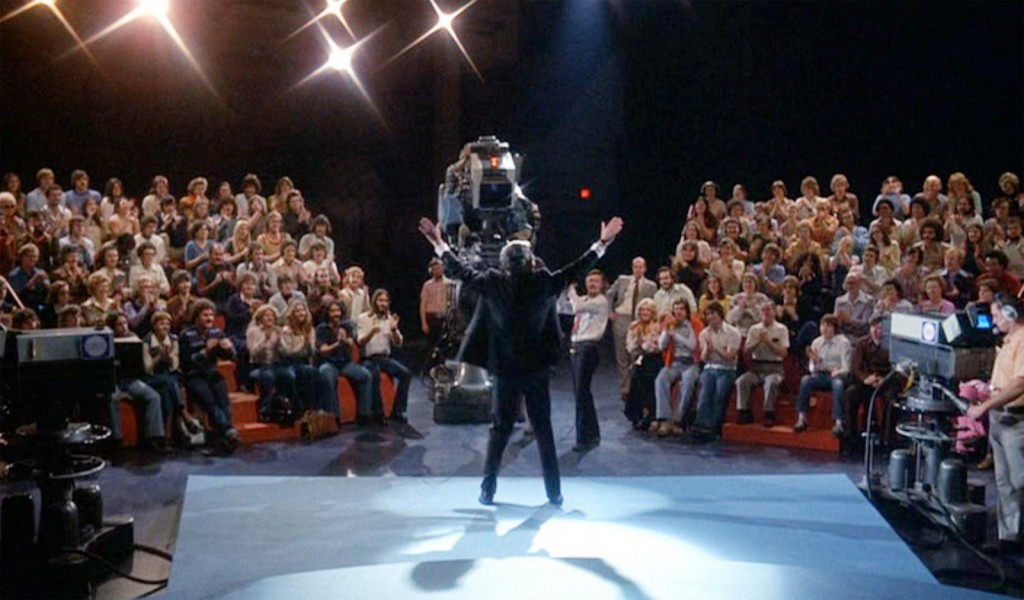
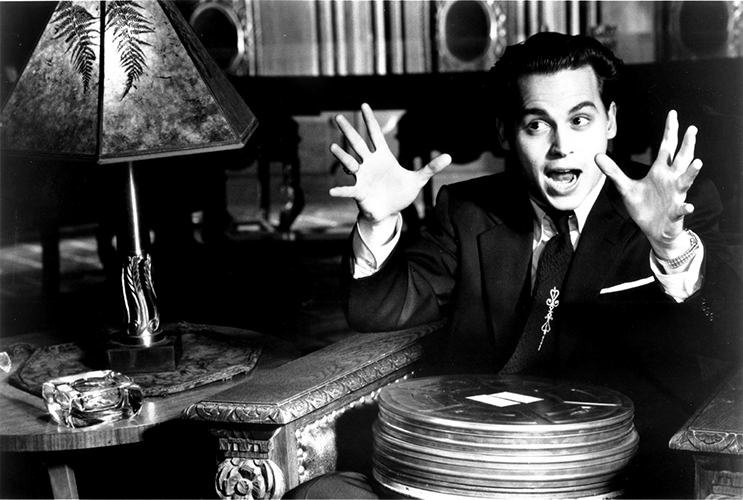
I’ve been on some sort of Fellini trip as of late.
Just haven’t been able to get enough of the man and his supremely sensuous phantasmagoria of time, space, shadow and light.
Few directors have so effortlessly (seemingly) blurred the line of fact, fiction, fantasy and farce with such delirious delight … and I think it’s safe to say that 8 1/2, his 1963 masterpiece, is the high watermark of his achievements. If you haven’t seen it in a while, please revisit it… it’s the sort of film that is entirely like a good bottle of old wine.
Call it ‘neorealism,’ or any other fancy schmansy moniker you can conjure … whatever ‘it‘ is, I’ll tell ya right now, Fellini’s ‘it‘ is eternal.
Just ask Marcello.
Filed under: art, cinema, fashion, film | Tags: 19th century, Abbie Cornish, Ben Whishaw, Bright Star, Fanny Brawne, Jane Campion, John Keats
Normally, I am not exactly what you would call a fan of Jane Campion’s films.
But a few weeks ago, I went to the theater and gave her latest film, Bright Star, a chance. Mostly because Kenneth Turan, the Los Angeles Times’ resident film critic, gave it a simply glowing review … and Turan is rather known for not giving glowing reviews.
I went in with my nose firmly placed in the air, ready to massacre what I was certain would be a self-important, purposefully ‘arty’ picture. And, suddenly, about an hour into it, I realized that I was crying … for no apparent reason at all. It was simply a matter of an unexpected, rushing wave of emotion sweeping over me, and I was caught in its riptide, helpless to resist. The same sort of feeling one gets when reading a challenging poem: the initial distrust, and then, bang, the thrust of emotion that leaves you thoroughly winded … and utterly in love. Rather like a Keats poem, to be honest.
Which is why Bright Star, the delicately beautiful film about the famous love affair between the young John Keats and Fanny Brawne starring the exquisite Abbie Cornish and Ben Whishaw, is so powerfully sensitive and entirely effective. It feels like a poem … not like someone pushing poetry down your throat which, I’m sure you’ll agree, makes all the difference in the world.
Rapturous in its realism, Bright Star feels and breathes and seethes with life and love and beauty. The early 19th century has never been so extraordinarily organic. Even though just a spectator in 2-D, the film pops with color, and vibrancy—we feel the flush of wind on Fanny’s fabric, the fragility of Keat’s coat collar, the quiet sunlight over a field of lavender, the warm breath of a tentative kiss… it is something rarely achieved on screen with such mastery, and my previous issues with Ms. Campions’ pretension have been duly sated.
The film itself is not likely to make a dent in the coming awards season, such is the lot of films of its beauty and weight, but if there’s one thing sure to seduce Academy voters it must surely be the exquisitely artful use of costume. The fabric of Miss Fanny Brawne’s clothing is as much a part of the film’s tapestry as Fanny herself … below are a few of what I consider to be the highlights ….
Filed under: classic movies, hollywood, movies | Tags: Fred Astaire; MGM; Royal Wedding
The following film clip just sums everything up: why Fred Astaire is a legend, why the Studio System worked, why the movies were were once absolute magic, and why Hollywood today is utterly doomed. It’s all there. In this five and a half minute snippet from MGM’s Royal Wedding.
(for more Kitty Packard Pictorial fun with Fred–and Ginger too– click here.)
Filed under: classic movies, film, movies, nostalgia | Tags: Danny Kaye; Virginia Mayo; Sam Goldwyn; Up In Arms; Wonder Man; The Kid From Brooklyn; The Secret Life of Walter Mitty; A Song is Born;
When I was growing up, some of my absolute favorite movies were Sam Goldwyn’s Danny Kaye/Virginia Mayo musicals made during the ‘40s. For a twelve year old, the films were bright, breezy, funny and chock-a-block with snappy tunes and zippy one-liners.
I thought it would be fun to revisit them to see if they’re still just as much fun today as they were then. ( They are.
)
Up in Arms (1944)
Although this film stars Dinah Shore with Kaye, it firmly sets up what was to be the Kaye/Mayo mold. It was Kaye’s first feature film and Goldwyn didn’t want to risk starring two unknowns, so Shore was brought in at the last minute to amp up the star wattage. Co-starring Dana Andrews and Constance Dowling, Up in Arms is Wartime Propaganda at its finest packaged in the form of a fluffy, sweetly silly romp in which hypochondriac Daniel Weems (Kaye) and best friend Joe (Andrews) are drafted into the army where Kaye’s obsessive compulsive behavior lands them both into a bottomless pit of hot water. Dinah Shore’s Tess’ Torch Song is a definite highlight, but more than that, Up In Arms first introduces us to what would be Kaye’s signature: his tongue-twisting, rapid-fire monologues.
Decades before the likes of Jim Carrey, and well before Jerry Lewis, Danny Kaye wrote the book on rubber-faced comic madness.
Written in partnership with his wife Sylvia Fine, Kaye’s singular mix of pantomime, song and dance is truly unique and are here unleashed for the first time. Kaye’s Melody in 4-F, a smashing stage success for him, is captured on film in Up In Arms … although tamed considerably for the censors.
Wonder Man (1945)
Wonder Man is a tired premise executed with delightful freshness and creativity. Kaye plays identical twins: bookworm Edwin Dingle and nightclub singer Buzzy Bellew. When Buzzy is knocked off by notorious gangster ‘Ten Grand Jackson’ for being the Man Who Knew Too Much, the only person who can bring the thugs to justice is Edwin—with a little help from the ghost of Buzzy, that is. (The special effects in the film, by the way, were cutting edge and won a special Oscar.) Buzzy’s ghost possesses his brother in order to lead the cops to Jackson, resulting in the proverbial tangled web we weave: Mild-mannered Dingle, with a squeaky-clean sweetheart of his own (Virginia Mayo) is forced to pretend to be the outrageous Buzzy who happens to be engaged to nightclub hottie Midge Mallone (Vera-Ellen). A cliché of a plot, perhaps, with predictable set pieces, definitely, but Kaye’s wild versatility and show-stopping shenanigans keeps the film fresh and funny. Vera-Ellen makes her feature film debut here, and her sensational talents are well showcased, particularly in a dazzling number entitled So In Love, and I am happy to report that it is just as delightful to me now as it was at the ripe old age of 12. The colors and the costumes are eye popping, but Ellen’s talent is what’s truly jaw-dropping:
[http://www.youtube.com/watch?v=oAizey5VDu8&feature=related]
p.s.: POTATO SALAD!
The Kid From Brooklyn (1946)
By the time Kaye and Mayo were cast in Goldwyn’s 1946 remake of Harold Lloyd’s The Milky Way, the team was box office gold. And even though The Kid From Brooklyn lacks Wonder Man’s ingenuity and spunk, it is still breezy, easy entertainment. Delightful, if not a bit dizzy, the film follows the exploits of milkman Burleigh Sullivan who apparently knocks out the middleweight champion of the world. Not exactly good PR for the champ’s agent who concocts a scam to profit over the mishap. He takes the gullible Burleigh and touts him as a boxing sensation, fixing fights across the country to turn him into a star. The fact that Burleigh boxes like he’s waving hello leads to quite a few memorable moments, particularly Eve Arden (the manager’s gal pal) who teaches him the ropes of boxing to the tune of Johann Strauss’ Blue Danube: “Trah-la-la-la-la-boom-boom-boom-boom!” The manager then bets against Burleigh in a Vegas-esque fight and, well, you can guess the outcome. Vera-Ellen is Burleigh’s dancing sister and Mayo is the singer that falls for him. Even though Mayo lip sync’s her numbers, it’s still a lot of fun to watch the Sammy Kahn numbers.
And oh those Goldwyn Girls.
The Secret Life of Walter Mitty (1947)
The Secret Life of Walter Mitty remains the most famous of the Goldwyn/Kaye/Mayo films, and understandably so. Norman McLeod, who had brought to the screen classics such as Topper, Lady Be Good as well as Wonder Man and Kid From Brooklyn, finely helms this memorably sweet, smart and sassy story of the loveable daydreamer Walter Mitty. Walter Mitty is a beleaguered wage slave at a pulp-fiction publishing company who is utterly (pardon the expression) pussy-whipped by his mother and fiancé, and retreats into his daydreams to find solace and assert himself as a man. When the woman of his dreams (Mayo) turns up on his train into town one unexpected morning, Mitty is pulled into a game of cat and mouse that turns his life upside down. Mayo, whose roles are painfully cookie-cutter in the Goldwyn films, is here able to actually flex some acting chops (more to follow in A Song is Born) and backed up by the likes of Boris Karloff, Faye Bainter and Ann Rutherford results in pure cinematic gold. It is also perhaps the most ‘mainstream’ Kaye/Mayo film—not the fluffy extravaganzas of the earlier films, but a film that pivots around a plot the viewer actually invests in. Mitty’s daydreams are terrific fun, as are the character actors and the suspense ramps up to a nail-bitingly fun finale.
A Song is Born (1948)
Long-time readers of the Pictorial will know exactly how dear this film is to our heart. Howard Hawks’ remake of his beloved 1941 screwball Stanwyck-Cooper starrer Ball of Fire is not the finely crafted sophisticated romp the original was … but it’s the music that makes this film positively priceless. In my opinion, the film contains s segment of celluloid that is living history in its most impressively organic form. Here we have the unprecedented (and arguably unmatched) interracial jazz ensemble of Tommy Dorsey, Lionel Hampton, Mel Powell, Benny Goodman, Charlie Barnett (WOW!) and Pops himself, Louis Armstrong, jamming together in the film’s titular A Song is Born. Kaye is his usual, stuttering, bumbling self, but it is Mayo who really gets to dig into the role. Taking her cue from Barbara Stanwyck’s femme fatale of the 1941 original, it is easy to see how Mayo would go on to play such tough jawed dames as White Heat’s Verna Jarret. (She’d already proven her range as Dana Andrew’s philandering wife in The Best Years Of Our Lives.) It is the last Kaye/Mayo pairing, and was a disappointment at the box office, but it certaily deserves rediscovery … if for no other reason than the following fabulous musical scenes:
Filed under: classic movies, hollywood, movies | Tags: Audrey Hepburn, Breakfast at Tiffany’s, Charade, My Fair Lady, Roman Holiday, Sabrina
If any movie star is a testament to the timelessness of classic film, it is Audrey Hepburn. For well over five decades the actress has been the symbol of everything sophisticated, chic and classy. Today she is the evergreen goddess whose little black dress, flawless taste and unearthly beauty remains a benchmark for high fashion—something that, unfortunately, overshadows her very solid body of work as an accomplished actress. Because it is her truly rare sincerity of character, her kindness of heart and sparkling spunk that dazzled audiences then and remains infectious to this day.
This weekend, LACMA’s film program (miraculously saved from the depths of despair) will kick off a tribute to one of Hollywood’s geunine leading ladies (for Audrey was a definitive lady) with a retrospective entitled Audrey Hepburn: Then, Now and Forever. While showcasing her well known classics Roman Holiday, Sabrina, Breakfast At Tiffany’s and My Fair Lady, the program will also include the roles that defined her as a quality actress, specifically the spine-tingling thriller Wait Until Dark and the deliciously sexy mystery romance Charade.
From the LACMA website:
“Perhaps the most beloved actress to emerge from the postwar studio system, Hepburn had brains, style, charm, class, and great timing. Eisenhower and Marilyn Monroe were the competing images of a newly suburbanized America, but for audiences excited by a flood of images from a rebuilt modern Europe, Hepburn was a revelation: she represented the aristocratic tradition rebottled as a hip, slim European girl with American-friendly qualities—such as spunk and wit—and old-school manners, particularly toward her elders. Hollywood took note and Hepburn was paired with many of the biggest male stars of the previous decade in a series of beautifully written comedies and romances that drew audiences into an idealized and sophisticated world.”
The screening schedule is as follows:
October 23 7:30 PM Roman Holiday
October 23 9:40 PM They All Laughed
October 24 7:30 PM Breakfast at Tiffany’s
October 24 9:35 PM Two for the Road
October 30 7:30 PM Sabrina
October 30 9:35 PM Love in the Afternoon
November 6 7:30 PM Charade
November 6 9:35 PM Wait Until Dark
November 7 7:30 PM War and Peace
November 13 7:30 PM My Fair Lady
Hope you can make it, dah-ling … and so does Cat!
Filed under: classic movies, film, movies | Tags: Asta Nielsen, buster Keaton, chaplin, Conrad Veidt, gloria swanson, Greta Garbo, J’accuse, Laila, Lillian Gish, London Film Festival, rudolph valentino, silent film, silent movies, Underground
A thoughtful and expressive piece appeared in today’s Guardian, praising the value, worth and beauty of silent cinema.
Three silent’s are slated to be screened at the London Film Festival later this month: Underground (1928, directed by Anthony Asquith), J’accuse! (1919, directed by Abel Gance), and Laila (1929, directed by George Schneevoigt), which, Guardian writer Ronald Bergan says, remind modern audiences just how eloquent dialogue-free movies are capable of being. He also makes the provocative argument that “if cinema history had started with sound, it would have been necessary to invent silent movies.”
Read his reverent op-ed below:
The London film festival is screening three silent classics this year, reminding us just how eloquent dialogue-free movies are capable of being.
Is there anyone out there who still needs to be convinced of the superiority of silent movies? They hold their own easily against sound, colour and widescreen films in any canonical list. Silent movies are the ne plus ultra of cinema. The rest is… theatre or literature. How exciting, therefore, that this year’s London film festival is screening three silent movie treasures: one British (Underground, 23 October), one French (J’Accuse, 24 October) and one Norwegian (Laila, 29 October).
Pre-sound movies are closer to Erwin Panovsky’s definition of cinema as “the dynamisation of space and the spacialisation of time”, and to Alfred Hitchcock’s belief in “pure cinema”. When film theorists attempt to define cinematic specificity, it is to non-talkies that they turn. I have a theory that if cinema history had started with sound, it would have been necessary to invent silent movies.
Actually, there is no such thing as a silent movie, because a musical accompaniment was an essential component of every performance. And how can anything so eloquent be termed “silent”? That is why I prefer to call them pre-sound movies, or non-talkies. Ironically, one of the few things that non-talkies couldn’t do was create silence. Silence as an acoustic effect exists only where sounds can be heard, as in Abel Gance’s The Life and Loves of Beethoven (1937), in a sequence where the composer loses his hearing. Incidentally, it is interesting to compare Gance’s non-talkie 1919 version of J’Accuse – which depicts death, delusion and insanity in the trenches – with his far less effective talkie remake of 1938.
Pre-sound films were more universal, with no need for subtitles or dubbing – FW Murnau’s The Last Laugh (1924) is so expressive that intertitles were unnecessary. Charlie Chaplin, feeling that talkies would limit his international appeal, and being popular enough, resisted dialogue for 13 years, making two of the screen’s greatest comedies, City Lights (1931) and Modern Times (1936), in the midst of an avalanche of talk.
Much is written about the cinematographic beauty and the use of montage in pre-sound films (for Sergei Eisenstein, sound destroyed montage, which he considered the essence of cinema) but of equal importance were the closeup and the performances. The absence of the spoken word concentrates the spectator’s attention more closely on the visual aspect of behaviour. Acting in non-talkies, now a lost art, had to be done in a manner different from the style on stage or the reality of ordinary life. This was precisely what the great actors of the silent period accomplished, far from the pantomimic exaggeration seen in films like Singin’ in the Rain. Lillian Gish, Gloria Swanson, Chaplin, Buster Keaton, Conrad Veidt, Greta Garbo, Rudolph Valentino and Asta Nielsen were among those that gave the most extraordinary performances in screen history. As Norma Desmond (Swanson) says in Sunset Boulevard (1950): “We didn’t need dialogue. We had faces.”
Filed under: film, movies | Tags: A Fistful of Dollars, A Fistful of Dynamite, For a Few Dollars More, Once Upon a Time in America, Once Upon a Time in the West, Rome Film Festival, Sergio Leone, spaghetti western, the Bad and the Ugly, The Colossus of Rhodes, The Good
Spaghetti Westerns and Sergio Leone are the cinematic equivalent of bacon and eggs. Peanut butter and jelly. Or any other divinely matched pairing the world would not be quite the same without. (although I could get along quite well without bacon and eggs, but for sake of argument…) Although slim in number, the seven feature films that make up Leone’s body of work had the remarkable effect of reinventing a dead genre (the Western) with his own brand of grit, realism and sweeping beauty. In watching his films today, it is little wonder that the director’s first job was as an assistant on Vittorio de Cica’s The Bicycle Thief—the good guys and the bad guys are equals as flawed, corruptible, f’d up humans. Hence the eternal humanity of Leone’s work.
To mark Leone’s 80th birthday, and the 20th anniversary of his death, the Rome Film Festival has paid tribute to the Italian director with a special exhibition of photographs taken from the Leone family archives, the Cineteca di Bologna and the Experimental Centre of Cinematography.
A selection from the exhibit follows below:
On Monday, the Guardian tipped me off to Spacesicks’ I Can Read Movies series.
Since this project has been up since the January, I am feeling woefully unhip over the fact that I have just discovered the wide, wonderful, dizzying world of Spacekick. I actually don’t know QUITE how to describe this mind-bending experience so all I can say is you have to see it to believe it.
The concept: give cult classic and popular films the 1960s pop art book cover treatment.
The result: sweeeeeeeeetness.
Today’s Financial Times’ How to Spend It has a, shall we call it, interesting homage to 40s fashion. I am not entirely sure how I feel about stylist Damian Foxe’s particular approach … but his muted watercolor palette is quiet and soft enough to evoke a romantic Brief Encounter-esque dream of the 40s.
Here are some highlights from the Yuval Hen’s photo shoot.